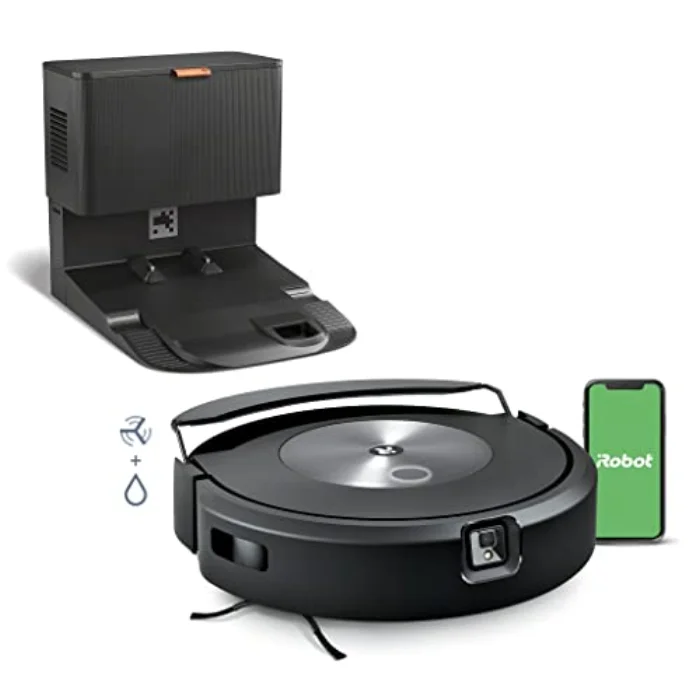
Who is the Roomba Combo j7+ for?
The Combo j7+ suits the person who wants a robot vacuum to actually disappear into the background of a busy household rather than become another chore that needs supervising. If you have children's toys on the floor, charging cables snaking across the room, a pet that occasionally leaves an unwelcome surprise, or simply a home that is lived-in rather than showroom-tidy, this is the robot built for you. It is also the natural choice for anyone who has been put off robot vacuums before by tales of a unit eating a phone charger or smearing a pet accident across the carpet — avoiding precisely those disasters is what iRobot designed this generation to do.
It is less obviously for you if you live in a small, uncluttered flat and just want hard floors kept tidy on the cheap. In that case the suction-strong, mapping-free eufy RoboVac 11S Max will keep you perfectly happy for a quarter of the price. And if you specifically want strong carpet pickup or full self-cleaning mopping rather than a wipe, it's worth weighing it against the Shark Matrix Plus and the flagship Roborock S8 Pro Ultra. For most ordinary homes, though, the j7+ is the balanced answer.
How the Roomba Combo j7+ performs
Navigation and obstacle avoidance
This is the headline, and it is the area where the j7+ pulls clearly ahead of the field. Where many robots rely solely on laser mapping to plan a route and then blunder into anything small that sits below the laser line, the Roomba pairs camera-based vSLAM mapping with forward-facing obstacle recognition. In practice that means it sees and steers around the things that habitually trap other robots: cables, socks, a stray slipper, a child's small toy. iRobot is confident enough in this to back the j7+ with its "Pet Owner Promise" — a commitment to identify and avoid solid pet waste rather than running through it. Anyone who has come home to a robot that has painted an accident across an entire ground floor will understand why that single feature can be worth the price of admission on its own. The mapping itself is mature and reliable, learning the layout of your home so you can later send it to clean a specific room from the app.
Cleaning power
On paper the j7+ offers around 2,200 Pa of suction, which reads as good rather than class-leading next to the 5,000-plus Pa figures some rivals quote. In real cleaning, though, the gap is far smaller than the numbers suggest, because iRobot's dual rubber rollers grip and agitate debris where bristle brushes tend to flick it away or tangle on hair. On hard floors it leaves an even, thorough finish, and on low- and medium-pile carpet it lifts the everyday dust, crumbs and pet hair that build up between deep cleans. It is a maintenance vacuum done very well rather than a once-a-month deep-carpet machine — and for the daily reality of most homes, that is exactly the right priority. If your home is mostly carpet and you want maximum grit extraction, the Shark Matrix Plus and its repeated grid passes are worth a look.
The self-empty dock
The "+" in the name is the Clean Base, and it is the feature that turns a robot vacuum from a clever toy into a genuine labour saver. After each clean the Roomba reverses onto the dock and the base vacuums the contents of its small onboard bin up into a large sealed bag. iRobot quotes roughly 60 days between bag changes, and in a typical home that holds up well — you genuinely can go weeks without thinking about the machine. The sealed bag also means you are not coughing into a cloud of dust every time you empty it, which matters for allergy sufferers. It is the single biggest reason the j7+ feels so hands-off compared with a robot you have to empty by hand after every run; if you are weighing whether the feature is worth it, our self-empty dock guide walks through the trade-offs.
Mopping
The Combo part of the name refers to the mopping pad, and here it pays to be honest about what you are getting. This is a wiping mop, not a scrubbing one: it dampens a pad and drags it across hard floors to lift light marks and freshen the surface, rather than working ground-in stains the way a dedicated spinning-mop flagship does. What it does brilliantly, however, is stay out of trouble. The mop arm automatically retracts and lifts up and over the top of the unit when it detects carpet, so you never come home to a soggy rug — a problem that plagues cheaper combo robots that simply drag a wet cloth everywhere. Treat the mop as a useful daily freshen-up rather than a deep clean and you will be very happy with it. If genuine scrubbing is your priority, read our take on the Roborock S8 Pro Ultra and the value-focused Dreame L10s Ultra instead.
The app and living with it
The iRobot Home app is one of the most polished and dependable in the category. Setup is straightforward, the learned map is easy to edit into rooms and zones, and the scheduling and routines work without the fuss that lets down some rivals. After a few cleans it understands your home well enough that day-to-day use comes down to a single tap or a voice command. It is mature, stable software, and on a machine you want to forget about, that reliability counts for a great deal.
The honest downside
The j7+ has two real drawbacks and it is only fair to name them plainly. The first is the price: at around £749.99 it sits firmly in premium territory, and you are paying chiefly for the obstacle avoidance and the self-empty dock rather than for raw suction. The second is that the headline suction figure is good rather than the highest on this list, so if you have deep, thick carpet throughout and want the most aggressive grit extraction money can buy, there are more specialised options. Neither point is a flaw in how the machine actually cleans — it simply prioritises intelligence and convenience over a chest-beating Pascal number. If those priorities don't match yours, the strong-suction, LiDAR-mapping Roborock Q5 Pro delivers a lot of the brains for far less money. If they do, the premium is money well spent.